Forest types · what grows here
Mushrooms of the spruce forest
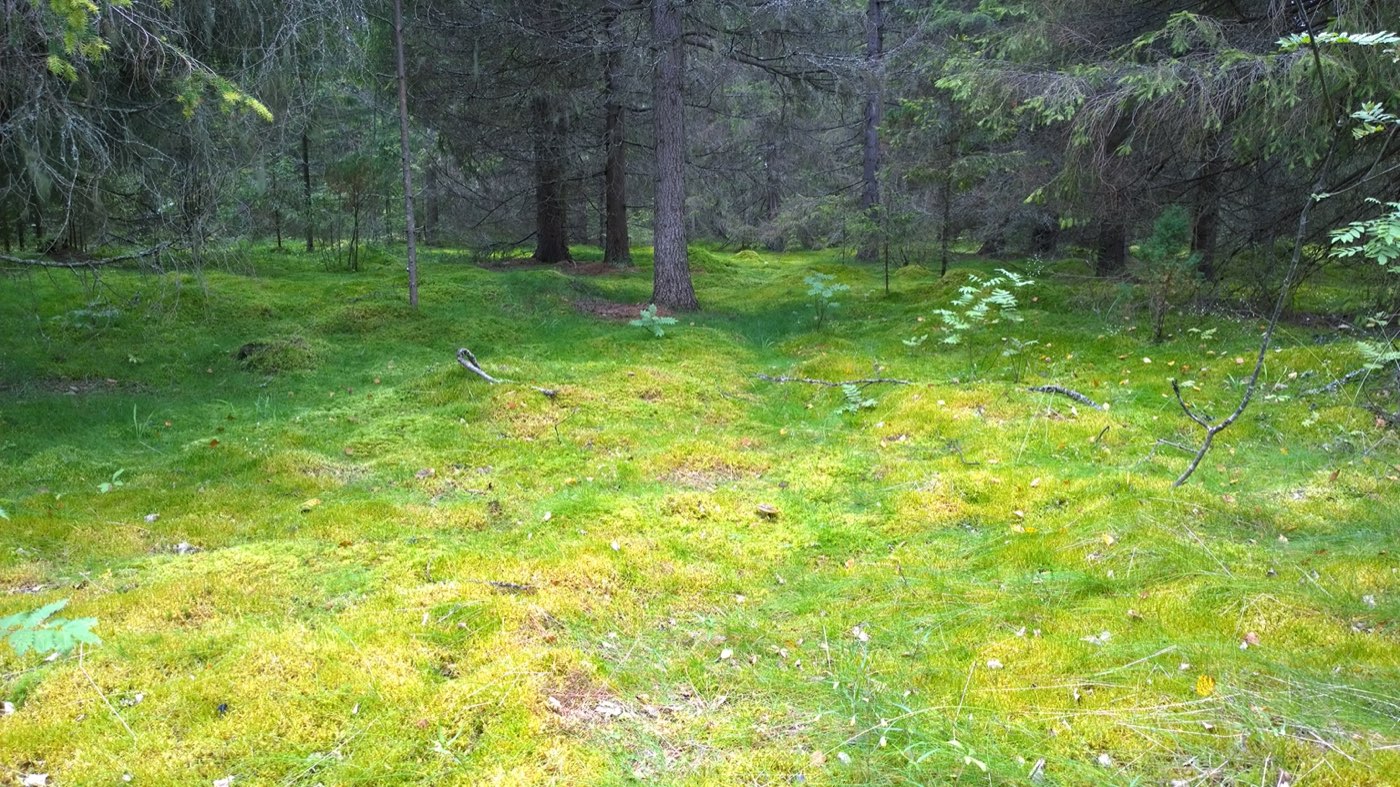
Mesic heath (tuore kangas) is Finland's commonest forest: spruce, bilberry and thick moss, shaded and damp. Hollows and the lower parts of slopes are its dampest and usually its best ground.
Which species are on the map
The funnel chanterelle and the curry milkcap are at their strongest on mesic heath in the model. The porcini leans richer and also wants an open canopy, so it turns up at edges more often than inside a closed spruce stand.
What else grows in the same forest
These are not on the map. They are listed because the same forest is worth reading in one go.
- Lampaankääpä (Albatrellus ovinus)
- Mossy sloping spruce on bilberry-type mesic heath. Well regarded, fruiting from August to October.
- Haaparousku (Lactarius trivialis)
- Damp spruce and mixed birch. Large picking volume, parboiled before use.
- Leppärousku (Lactarius deterrimus)
- A spruce associate, often in younger stands than the mapped species.
- Vaaleaorakas (Hydnum repandum)
- From herb-rich forest to mesic conifer. No dangerous lookalikes.
Identification and use: the Finnish Food Authority's recommended food mushrooms (in Finnish).
How to recognise the forest type
Bilberry and an unbroken moss carpet are the marks of mesic heath. When grasses and broadleaf trees appear, you are heading towards the herb-rich forest species. When the moss thins and heather takes over, you are on pine heath.
The whole map
All six species and how the prediction is worked out: the mushroom maps and their limits.