Forest types · what grows here
Mushrooms of the dry pine heath
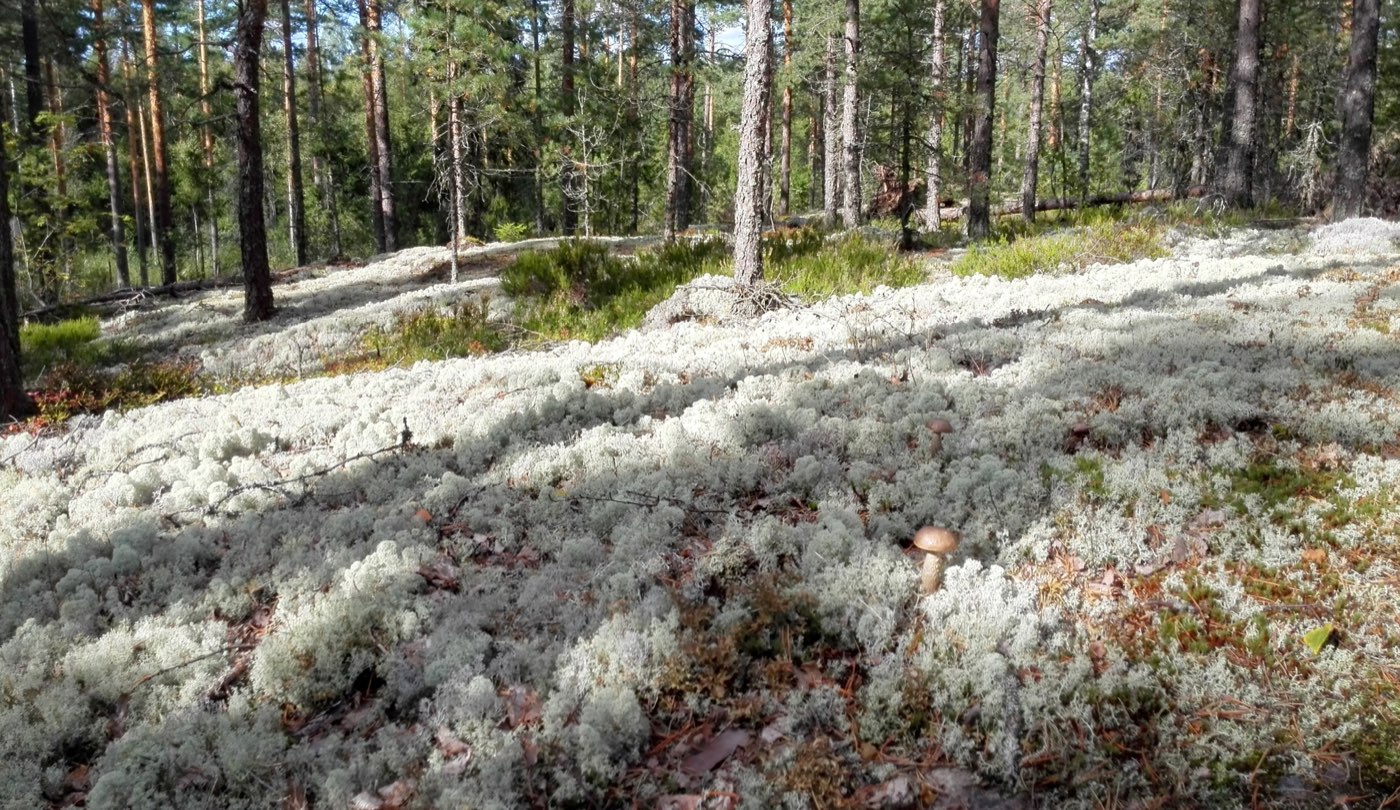
Sub-xeric and xeric heath (kuivahko and kuiva kangas) is pine, heather and reindeer lichen. The soil is sandy and poor, the stand is open, and light reaches the ground. Eskers and sandy hills are its most typical form.
Which species are on the map
The pine porcini is the species of this forest type: sub-xeric heath is the model's optimum and xeric heath is almost as good. The curry milkcap leans richer, towards mesic heath, but reaches onto sub-xeric ground.
What else grows in the same forest
These are not on the map. They are listed because the same forest is worth reading in one go.
- Kangasrousku (Lactarius rufus)
- The same heath, but tolerates younger and denser stands and reaches onto pine mires. One of the most picked species in the country. Parboiled before use.
- Kangastatti (Suillus variegatus)
- The same pine heath, very common, milder in flavour than the porcini.
- Tuoksuvalmuska (Tricholoma matsutake)
- Sandy eskers, old pine, thin humus and lichen patches. Rarer, and the most valuable species on the list.
- Voitatti (Suillus luteus)
- Young and planted pine, which is exactly the forest where the mapped species do not yet grow.
Identification and use: the Finnish Food Authority's recommended food mushrooms (in Finnish).
How to recognise the forest type
Reindeer lichen and heather mean xeric heath. When the ground cover turns to bilberry and the moss thickens, you are already on mesic heath, and then it is worth reading the spruce forest species. A dense thicket is not the ground for any mapped species, even where the tree species is right.
The whole map
All six species and how the prediction is worked out: the mushroom maps and their limits.